

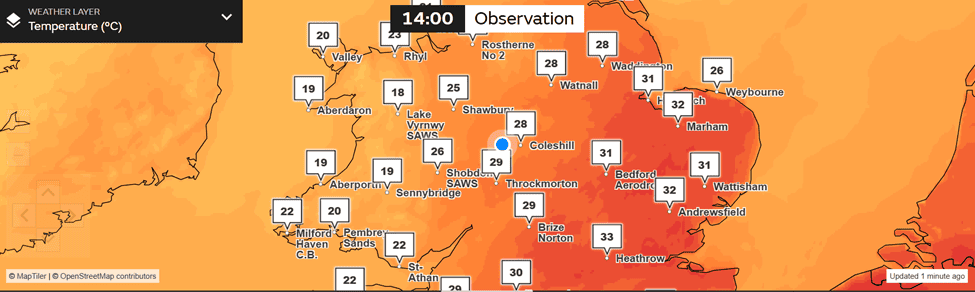
Clinicians at the Midland Metropolitan University Hospital in Smethwick, are reminding local people to take precautions against the heat, after the UK Health Security Agency (UKHSA) issued the 12th heat-health alert for the West Midlands, in the last 10 weeks.
Current temperatures in the region are forecast to reach up to 27°C, part of a wider spell of exceptional heat that has seen the UK record temperatures of 35°C or higher in May, June and July this year for the first time on record, according to the Met Office. An amber alert at a higher level is in place for the same period across the East Midlands, East of England, South East and London.
Tips to stay safe:
• Drink plenty of water and fluid throughout the day, even if you’re not thirsty. Avoid excessive alcohol and limit caffeine.
• Stay out of direct sunlight between 11am and 3pm whenever possible.
• Choose lightweight, loose-fitting clothing such as cotton or linen.
• Keep your skin cool using water, damp clothes or cool showers.
• Wear sunscreen, a wide-brimmed hat, and sunglasses outdoors.
• Keep homes cool by closing blinds, curtains and windows during the day and opening windows overnight when temperatures fall.
• Check on elderly relatives, neighbours and anyone who lives alone.
• Know the signs of heatstroke – call 999 if someone is confused, has a high temperature, or doesn’t improve after 30 minutes of cooling down.
Hot weather can affect anyone, but older people, young children, pregnant women and people with long-term health conditions face the greatest risk. SWB NHS Trust is asking the public to look after themselves and check on relatives, neighbours and anyone who lives alone, who are most at risk of heat-related illness.
Patients and visitors can check today’s local temperature and forecast for Smethwick at any time via the live regional temperature map
Dr. Taylor Davis, Emergency Medicine Consultant at the Midland Metropolitan University Hospital, said: “Working in a busy A&E, our priority is to keep patients safe, and the public can help us do that by looking after themselves. A few minutes spent checking on an elderly neighbour or making sure a child is drinking enough water can be the difference between a comfortable week and a hospital visit.”
Heat exhaustion causes tiredness, dizziness, headache, nausea, and heavy sweat. Move the person to a cool place, give water, and cool them with a damp cloth or fan; most recover within 30 minutes. Heatstroke is a medical emergency: signs include high temperature, confusion, dry skin despite feeling hot, a fast heartbeat, or fast breathing. Call 999 if someone shows these signs or doesn’t improve within 30 minutes. For non-emergency advice, contact NHS 111.