

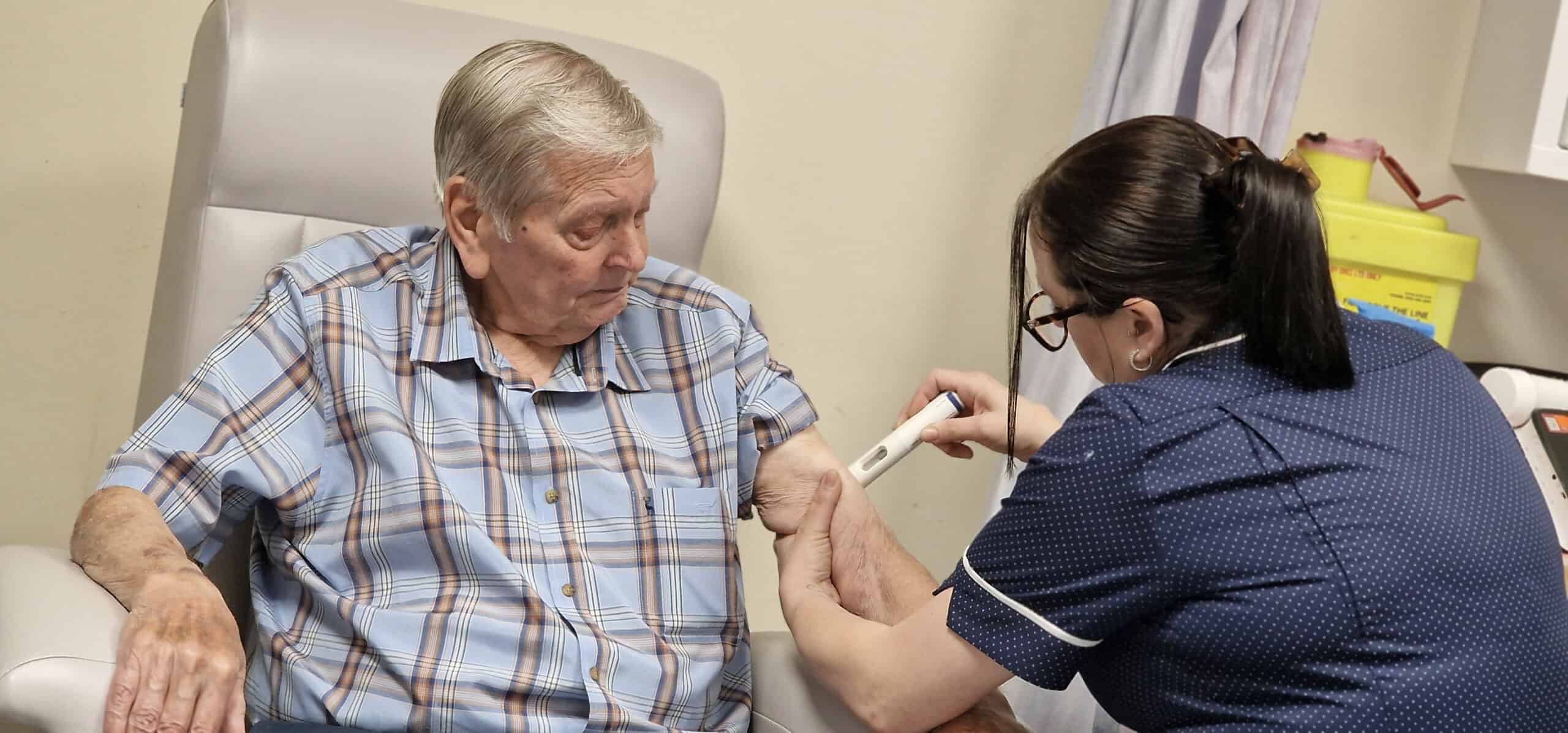
Patients with uncontrolled Chronic Obstructive Pulmonary Disease (COPD) who suffer repeated flare-ups are being offered a new treatment which could help them stay well for longer and avoid emergency hospital care.
Biologic treatments have been introduced by respiratory teams at The Dudley Group NHS Foundation Trust and Sandwell and West Birmingham NHS Trust, giving eligible patients across the Black Country access to the latest advances in COPD care closer to home.
The pathway was first launched at Russells Hall Hospital in Dudley before being rolled out at Sandwell and West Birmingham.
Among the first to benefit is 83-year-old John Treadwell, who recently receive the treatment. John has experienced six COPD exacerbations in the past 12 months, three of which resulted in hospital admissions. He described how the condition had increasingly restricted his day-to-day life and prevented him from doing many of the things he enjoyed.
For John and his wife Linda, the new treatment offers the prospect of greater stability and independence. Linda will be trained to administer John’s injections at home, meaning that once established on treatment he will not need to return to hospital for every dose.
John said: “COPD has had a big impact on my life and has stopped me doing a lot of the things I used to enjoy. Having so many flare-ups, and ending up in hospital three times over the last year, has been difficult for both of us.
“We’re hopeful this treatment will help keep me well for longer. Linda being able to give me the injections at home will also make a real difference because it means we can continue managing things ourselves and stay as independent as possible.”
Biologics are already used to treat conditions including severe asthma and are now available for a selected group of people with chronic obstructive pulmonary disease (COPD) whose condition remains uncontrolled despite existing treatments.
They work by targeting specific processes involved in inflammation and are available to patients who meet particular clinical criteria, including raised levels of eosinophils – a type of white blood cell.
For people with COPD, a flare-up can cause a sudden and frightening deterioration in their breathing, often requiring steroids or antibiotics and, in the most serious cases, emergency treatment or admission to hospital.
For COPD patients, biologic treatment could reduce the number of these flare-ups and help them manage their condition more effectively.
Dr Paren Chohan, Consultant in Respiratory Medicine at The Dudley Group NHS Foundation Trust, said: “This is an exciting development for people whose COPD continues to have a major impact on their lives despite receiving the best available treatments.
“Patients such as John can experience repeated exacerbations which affect not only their physical health, but their confidence, independence and ability to enjoy everyday life.
“Biologic therapies give us another evidence-based option for carefully selected patients, with the potential to reduce debilitating flare-ups and help people spend more time well and at home.
“We’re proud to have introduced this treatment in Dudley and to now see it being offered by our respiratory colleagues at Sandwell and West Birmingham, bringing the latest advances in respiratory medicine to patients across our communities.”
Specialist respiratory teams will identify and assess patients who may be suitable for treatment, working with colleagues across primary and secondary care to support referrals and ongoing care.
The new pathway is part of a wider focus on earlier intervention and prevention, helping people with long-term conditions stay healthier, retain their independence and reduce avoidable pressure on urgent and emergency services.