

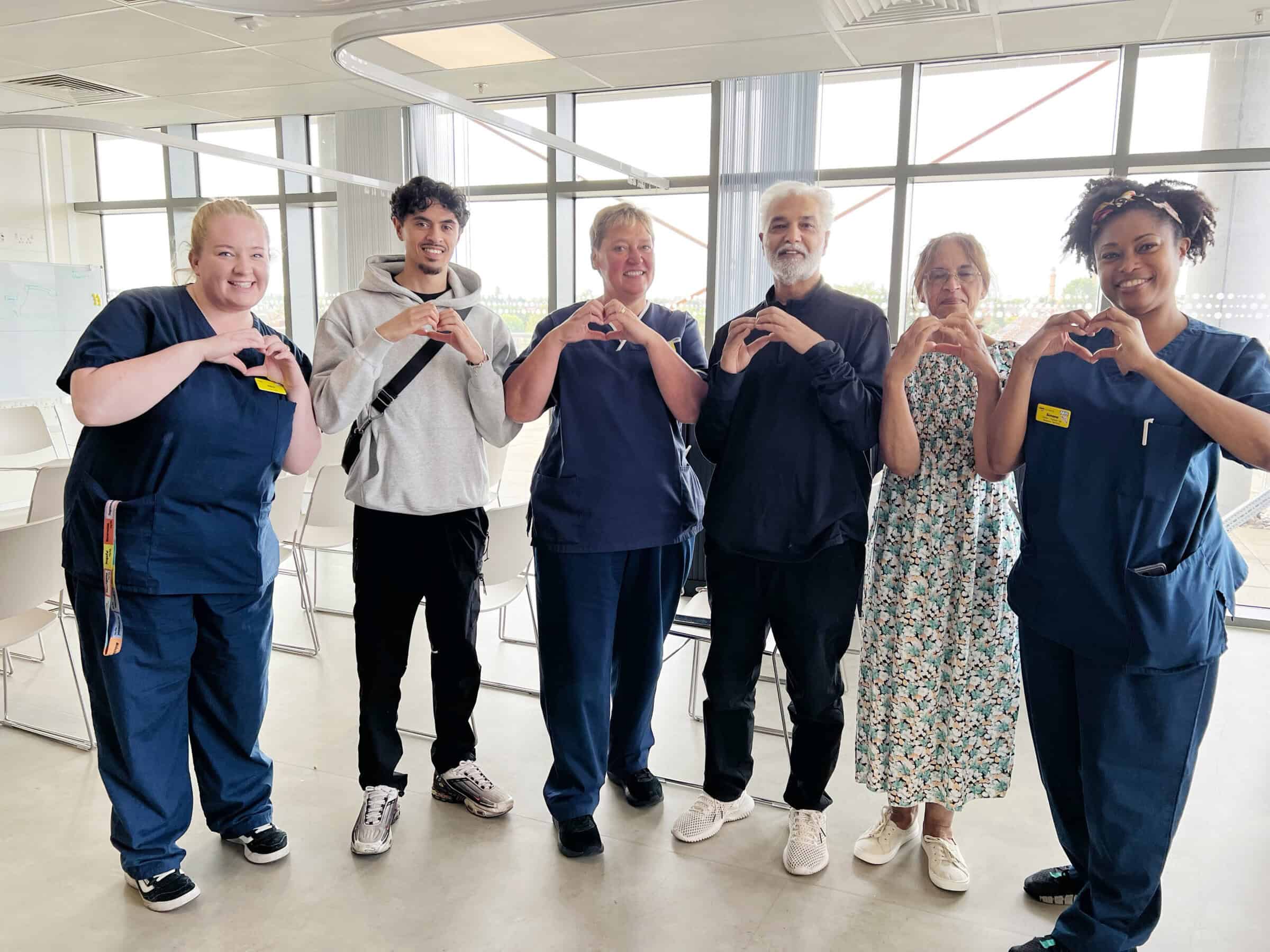
A man who spent two months in hospital after suffering a life-threatening heart attack has shared how a diary thoughtfully kept by NHS staff helped him piece together the weeks he could not remember and discover the kindness shown to him while he was critically ill.
When Amritpal Virdee was rushed to the Midland Metropolitan University Hospital following a heart attack in December 2025, he could never have imagined how much of the following weeks would be missing from his memory.
After undergoing a procedure to fit a stent and restore blood flow to his heart, his condition deteriorated, his heart stopped for several minutes and he was admitted to the hospital’s Intensive Care Unit (ICU), where specialist teams cared for him as he fought to recover.
While Amritpal was sedated and unaware of much of what was happening around him, nurses were quietly recording his journey in a patient diary, capturing everything from updates on his condition to visits from family and the small, everyday moments that might otherwise have been forgotten. These diaries also provide families with a record of their loved one’s time in intensive care.
He said: “After reading the diary it’s filled in the gaps of what was missing in my memory, and I cannot begin to say how valuable they are to me in understanding what people did around me while I was sedated.”
Among the entries was a particularly touching account of a visit from his brother. A nurse had switched on the television so they could watch the news and Match of the Day, only for the team to discover, much to their amusement, that Amritpal was a Newcastle United supporter.
It was a simple, light-hearted moment, but one that might have been lost forever had it not been written down.
For Amritpal, these personal details have helped turn an unfamiliar and frightening period of his life into a story he can begin to understand, reminding him that even when he was unable to communicate, those around him were thinking about his comfort and wellbeing.
The diaries form part of the wider emotional and psychological support offered to patients and their families by the Critical Care Follow Up Support Team at Midland Met, recognising that recovering from a serious illness is about more than physical healing.
Catherine Beddowes, Senior Sister, Critical Care Follow Up Support, explained: “When patients spend time in intensive care, they can lose days or even weeks of their lives. They might wake up with very little understanding of what has happened to them, which can be incredibly difficult to come to terms with.
“Keeping a diary is a simple but meaningful way of helping them make sense of that experience. It allows us to capture not just the medical milestones, but the human moments too – the visits from family, the conversations and the little things that make someone feel cared for.
“These might seem like ordinary details at the time, but for someone like Amritpal, they can mean the world.
“It’s wonderful to see how well he is recovering and to know that something as simple as a diary has helped him reconnect with a part of his life that he otherwise might never have known about.”
Now recovering well after his two-month hospital stay, Amritpal has been able to look back through the diary and gain a greater understanding of the journey he has been on and the people who helped him along the way.
What began as a collection of notes written at his bedside has become a lasting reminder of the compassion, dedication and personal care he received during one of the most difficult periods of his life.
Amritpal added: “I just want to say a big thank you to the staff and the doctors for their dedication at the hospital. I will forever be indebted to them.”